For most of the last century, architecture treated carbon as someone else’s problem — a concern for the energy sector, not the design studio. That assumption no longer holds. The materials that go into a building’s structure and envelope can account for as much carbon impact as decades of its operation, and increasingly, clients are asking us to account for it from the very first sketch.
Rethinking the material palette
Embodied carbon — the emissions associated with extracting, manufacturing, transporting and installing a material — doesn’t show up on a utility bill, which is part of why it’s been so easy to ignore. We’ve spent the past two years building an internal materials database that tracks embodied carbon alongside cost and durability, so the trade-offs are visible at the moment a decision is made, not after the fact.
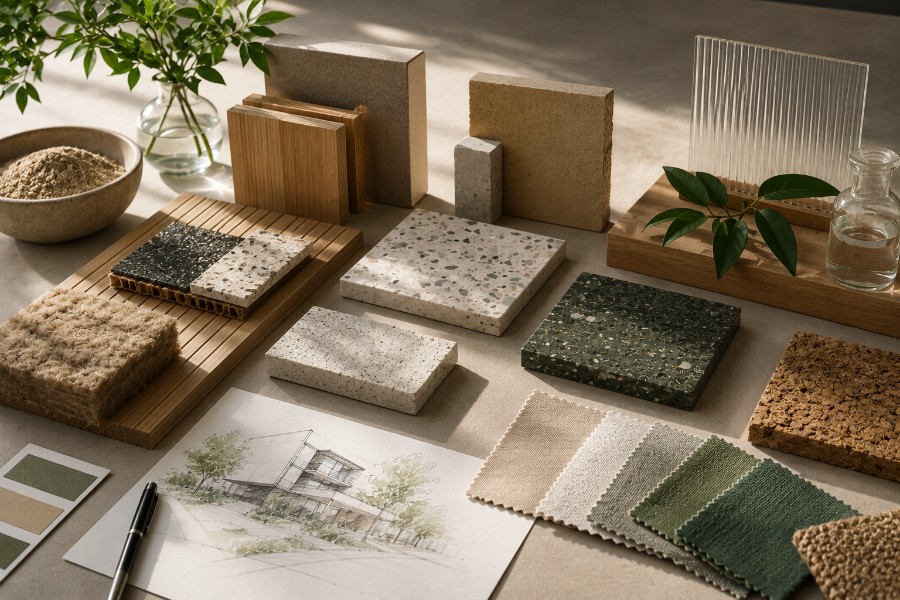
In practice, this has shifted our default specifications more than we expected. Mass timber now sits ahead of steel wherever spans allow it. Low-carbon concrete mixes with supplementary cementitious materials have become our baseline, not an upgrade. And we’ve started specifying reclaimed and regionally sourced stone far more often, simply because transport distance turns out to matter more than most people assume.
The lowest-carbon material is very often the one you don’t use at all — the square footage you design out, not the finish you swap in.
Craft doesn’t have to suffer
The most common pushback we hear is that sustainable material choices mean compromising on detail or finish. Our experience has been close to the opposite. Constraint tends to sharpen design decisions rather than dilute them — a limited material palette, chosen for carbon performance, has repeatedly pushed our teams toward more considered joinery, more honest expression of structure and a calmer overall material story.
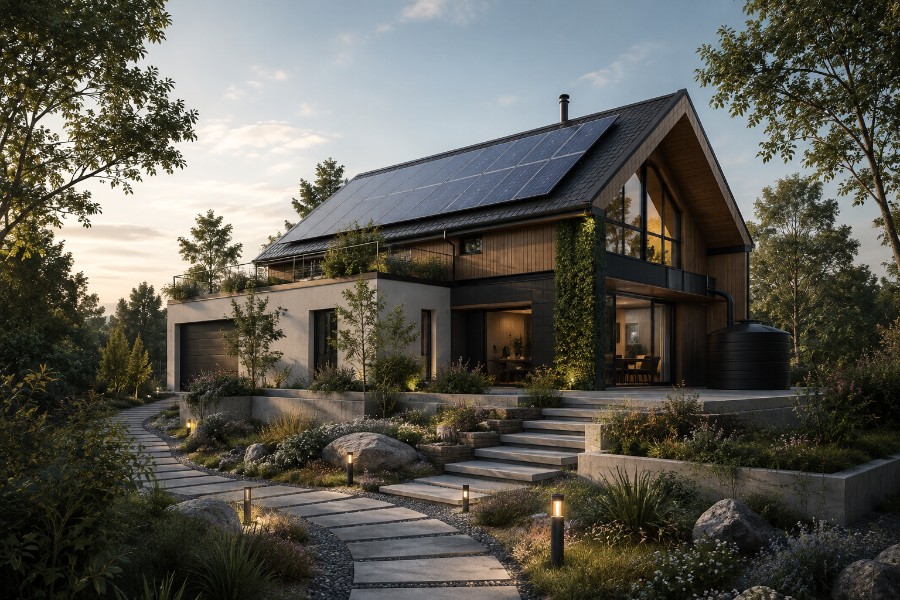
The Courtyard House is a good example. Its board-formed concrete wall and FSC-certified cedar cladding weren’t chosen instead of a more expressive material approach — they became the expressive approach, once we let their performance profile guide the design rather than fight against it.
Where we go from here
We don’t think low-carbon design is a checkbox to clear once and move on from — it’s a moving target that gets more demanding as better data and better materials become available. Every project we complete adds to what we know, and every client conversation about budget and carbon trade-offs sharpens how we advise the next one.
If you’re starting to think about embodied carbon on your own project, we’re always happy to talk through what we’ve learned — including the choices that didn’t work as well as we hoped.